
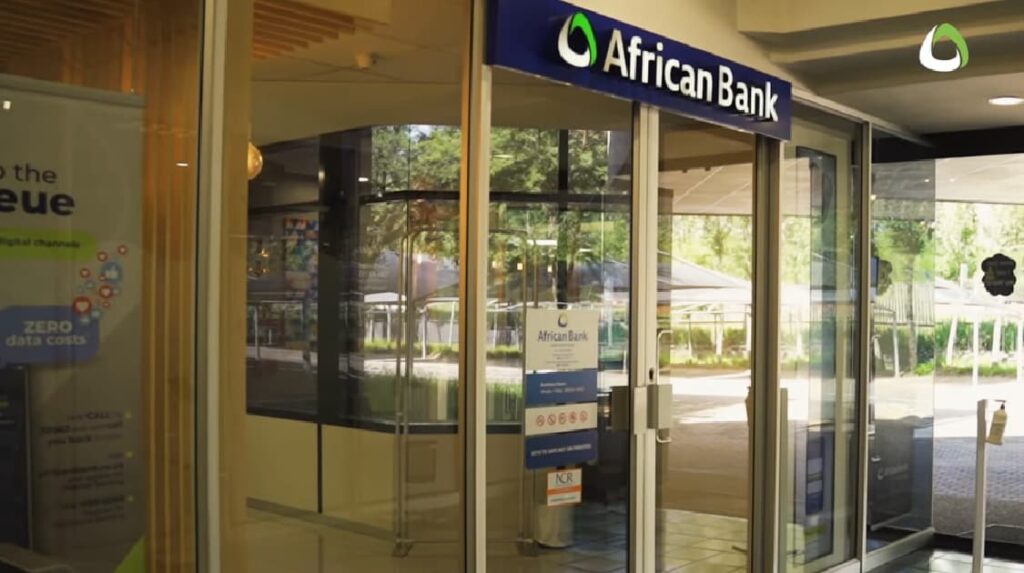
African Bank transaction fees are not limited to the monthly account fee. ATM withdrawals, debit orders, cash transactions, immediate payments and other services can also generate charges. African Bank’s older MyWORLD pricing guide separated charges into service fees and usage fees. An older published MyWORLD tariff charged R9.50 per R1,000 for withdrawals at an African Bank ATM and R10 per R500 at other-bank ATMs. These figures should be treated as historical until confirmed against the current 2026 tariff. The same older guide listed the first two till-point cash withdrawals as free and subsequent withdrawals at R2, while branch cash withdrawals were considerably more expensive. Historical MyWORLD pricing listed EFTs as free, while beneficiary/once-off payments and immediate payments could carry separate charges.
A publicly available 2025 MyWORLD statement shows a R6 monthly account fee, so readers should not rely on the older R5 monthly charge as a current price. Card purchases have historically been free on MyWORLD, but certain cash-related card transactions and declined transactions can attract fees. The cheapest transaction is often the one you avoid. Reducing unnecessary ATM withdrawals, branch transactions and immediate payments can make a noticeable difference over a year. If you are checking your own banking costs, use your actual statement rather than relying solely on an online fee table.
Because African Bank’s complete current 2026 personal tariff could not be independently confirmed from an accessible official source for this article, always check the live tariff or fee shown in your African Bank banking channel before relying on a specific amount.
If you use African Bank for everyday banking, the monthly account fee is only one part of what your account can cost. The charges that matter can come from ordinary things you do throughout the month: withdrawing cash, making an EFT, paying a debit order, using an ATM, requesting a statement or allowing a transaction to be declined because there is not enough money in the account. That is why understanding African Bank transaction fees is more useful than simply asking whether African Bank is cheap or expensive.
African Bank’s MyWORLD account has historically used a mixture of service fees and usage fees. Older published MyWORLD pricing guides show charges for ATM withdrawals, till-point cash withdrawals, debit orders, immediate payments, cash deposits and other services. However, there is an important 2026 caution. Some 2025 MyWORLD statements available publicly show a monthly account charge of R6, demonstrating that pricing had changed from the older R5 monthly fee, but an individual statement is not a substitute for the bank’s current tariff. So this guide does two things: it explains how African Bank transaction fees work, and it clearly separates verified historical pricing from amounts that should be confirmed with African Bank before you transact.
TABLE of CONTENTS:
- What Are African Bank Transaction Fees?
- Is African Bank MyWORLD Free?
- African Bank EFT Fees: What Should You Expect?
- Standard EFT vs Immediate Payment
- African Bank ATM Withdrawal Fees
- Why Other-Bank ATM Withdrawals Can Become Expensive
- Cash Withdrawal at a Till Point
- What About Cash Deposits?
- Card Purchases and Swipes
- Debit Order Fees
- What Happens When a Transaction Is Declined?
- SMS and Notification Charges
- Balance Enquiries and Statements
- Printed Statements vs Digital Statements
- Payment Recalls and Disputes
- African Bank Transaction Fees: A Practical Summary
- How to Reduce Your African Bank Transaction Fees
- How Much Do African Bank Fees Cost You in a Year?
- African Bank Fees Compared With Other Banks
- What If You Are Considering Switching From African Bank?
- What Your Bank Statement Can Tell You
- When Should You Question an African Bank Fee?
- Frequently Asked Questions
- What are African Bank transaction fees?
- Does African Bank charge for EFTs?
- How much does African Bank charge for an ATM withdrawal?
- Does African Bank charge for card swipes?
- Does African Bank charge a monthly account fee?
- How much does African Bank charge for a debit order?
- Can I withdraw cash at a shop with African Bank?
- Is African Bank cheaper than Capitec?
- How can I avoid African Bank transaction fees?
- Where can I calculate my bank fees?
- Conclusion
What Are African Bank Transaction Fees?
African Bank transaction fees are charges associated with using your account and its banking services.
They can be divided into two broad groups.
Service fees are connected with maintaining or servicing the account.
Usage fees are triggered when you perform particular transactions.
That distinction appeared in African Bank’s published MyWORLD pricing structure. The older pricing guide described service fees as charges associated with servicing the MyWORLD account and its linked pockets, while usage fees applied to transactions performed on those accounts.
This is an important distinction because you can have a relatively low monthly account charge and still pay considerably more if you use a lot of chargeable services.
For example, someone who mainly pays by card and uses digital banking may have a different monthly cost from someone who withdraws cash several times, pays numerous debit orders and regularly uses immediate payments.
The account itself has not changed.
The behaviour has.
Is African Bank MyWORLD Free?
The answer depends on what you mean by “free.”
African Bank previously advertised MyWORLD as a free account, but it introduced a monthly fee in October 2023. BusinessTech reported that the monthly fee was initially set at R5, alongside changes to several cash-related charges.
More recent publicly available MyWORLD statements from 2025 show a R6 monthly account fee.
That means an older article stating that MyWORLD has no monthly fee should not automatically be relied upon today.
At the same time, a monthly fee does not tell you the full cost of the account.
You still need to consider the transactions you perform.
This is the same principle I use throughout SA Bank Fees: the cheapest-looking account is not necessarily the cheapest account for your particular banking habits.
Our comparison of major South African bank fees looks at this broader issue across the major banks.
African Bank EFT Fees: What Should You Expect?
EFTs are one of the areas where African Bank’s pricing structure can be confusing because not every electronic payment necessarily falls into the same category.
Historical MyWORLD pricing published by African Bank listed EFTs as free. The same pricing information separately listed beneficiary or once-off payments and immediate transfers, which could attract charges.
That distinction matters.
A normal EFT and an immediate payment are not necessarily priced the same way.
An ordinary electronic payment may be processed through the normal banking clearing process.
An immediate payment is designed to move money faster and can therefore have a separate charge.
The precise terminology and available payment options can also change as banks update their digital banking platforms.
For that reason, I would not assume that every electronic transfer from an African Bank account is either completely free or subject to one universal fee.
Check the transaction type displayed before confirming the payment.
What About an African Bank to Capitec EFT?
If you are sending money from African Bank to Capitec, you are making a domestic interbank payment.
The sender’s African Bank account is the side where you need to check the applicable transfer fee.
Capitec’s current 2026 pricing, for comparison, lists R2 for a payment to another South African bank and R6 for an immediate payment to another South African bank. Those are Capitec’s charges when Capitec is the sending bank; they are not a charge for receiving an African Bank EFT.
We have a separate guide covering how to transfer money from African Bank to Capitec, including the information needed, standard EFTs versus immediate payments and what to check if the money does not arrive when expected.
Standard EFT vs Immediate Payment
This distinction is worth understanding because choosing the faster option can change your transaction cost.
A standard EFT is intended for an ordinary bank-to-bank payment.
An immediate payment is intended to make funds available much faster.
If you are paying a supplier, transferring money between your own accounts or sending money to another person and there is no urgency, a standard payment may be sufficient.
If the recipient needs the money urgently, you may consider the immediate-payment option if it is available for your account.
But there is a simple rule I would follow:
Do not select “immediate” just because it sounds better.
First ask whether the recipient actually needs the money immediately.
If not, paying an additional fee for speed may be unnecessary.
African Bank ATM Withdrawal Fees
ATM withdrawals are one of the easiest ways to accumulate small banking charges.
African Bank’s older published MyWORLD tariff listed:
- African Bank ATM withdrawals at R9.50 per R1,000.
- Other-bank ATM withdrawals at R10 per R500.
- Till-point cash withdrawals with the first two free and subsequent withdrawals at R2.
- Branch cash withdrawals at a much higher fee structure.
These figures are useful for understanding the structure, but I would not present them as guaranteed 2026 African Bank rates because the accessible source is an older pricing guide.
The practical lesson remains valid.
Where you withdraw your cash can affect the price.
Using an African Bank ATM and using another bank’s ATM may not cost the same.
That difference becomes more important when you withdraw cash regularly.
Our ATM withdrawal fees in South Africa guide looks at the broader problem of repeated ATM charges.
Why Other-Bank ATM Withdrawals Can Become Expensive
Imagine you withdraw cash once a month.
The charge may barely register.
Now imagine withdrawing four or five times every month.
The same type of fee is being repeated.
This is why I would look at the number of withdrawals rather than focusing only on the price of one withdrawal.
For someone who needs cash regularly, it can make sense to plan withdrawals rather than making several small withdrawals throughout the month.
For example, withdrawing R500 today and another R500 two days later can create more transaction events than withdrawing an appropriate amount once.
That does not mean you should carry large amounts of cash simply to avoid fees.
It means that unnecessary ATM visits can become an avoidable banking cost.
Cash Withdrawal at a Till Point
Till-point cash withdrawals can be another option.
African Bank’s historical MyWORLD pricing guide stated that the first two till-point cash withdrawals were free, with subsequent withdrawals charged at R2.
Older comparison data also identified till-point withdrawals as one of the lower-cost ways for MyWORLD customers to access cash.
However, because transaction pricing can change, check the current charge displayed by African Bank before relying on the allowance.
There can also be limits imposed by the retailer or payment channel.
So if you are standing at a supermarket till and planning to withdraw cash, confirm the amount and applicable fee before completing the transaction.
What About Cash Deposits?
Cash deposits deserve separate attention.
African Bank’s older MyWORLD pricing structure included different methods for depositing cash, including participating retailers and other cash-acceptance channels.
Older reporting also showed that African Bank had changed its cash-deposit pricing as part of the 2023 MyWORLD tariff revision. BusinessTech reported that deposits through African Bank ATMs were reduced at that time.
The exact current 2026 charge is one of the figures I would not quote without checking the latest African Bank tariff.
If you deposit cash frequently, this is particularly important because the fee may depend on the channel and amount.
A customer depositing R500 once a month has a different cost profile from a small cash-based business depositing several thousand rand every week.
If cash is a regular part of your banking, compare the deposit fee as carefully as the monthly account fee.
Card Purchases and Swipes
Card purchases are another area where African Bank’s historical MyWORLD pricing was relatively straightforward.
Older published comparisons listed card payments/swipes at R0 for MyWORLD.
The same historical comparison also listed online purchases as free.
That is useful because everyday card spending can generate a large number of transactions.
If each ordinary card purchase carried a separate fee, the cost could become significant.
However, “card purchase is free” does not mean every transaction involving a card is free.
Cash withdrawals, cash-back transactions, international transactions, replacement cards and other services can have separate pricing.
That is why the wording of the tariff matters.
Debit Order Fees
Debit orders are another small charge that can accumulate.
Historical MyWORLD pricing listed a debit-order charge, with older published figures showing R3 per debit order and later pricing information indicating changes.
I would therefore not use the historical R3 amount as a confirmed 2026 price without checking African Bank’s current tariff.
The more important point is how debit orders affect your total monthly cost.
Suppose you have:
- A cellphone debit order.
- Insurance.
- Streaming services.
- Medical expenses.
- A gym membership.
- Other recurring payments.
If each attracts a fee, the total can be noticeably higher than the monthly account charge.
This is why I recommend checking your statement rather than trying to remember what the bank’s pricing page said when you opened the account.
What Happens When a Transaction Is Declined?
A declined transaction can sometimes cost money too.
Historical African Bank pricing information included charges for unsuccessful transactions, such as insufficient funds and declined ATM transactions.
This is an area where customers can be caught off guard.
You might think:
“I didn’t actually buy anything, so why was I charged?”
The reason is that the bank may have processed an attempted transaction and applied the applicable unsuccessful-transaction fee under its tariff.
The exact amount depends on the current account and pricing structure.
The simplest way to reduce this type of charge is to make sure there is enough available money in the account before scheduled debit orders and payments are processed.
It sounds obvious, but recurring payments can make this difficult if your income arrives at different times of the month.
SMS and Notification Charges
Digital notifications can also appear as separate statement entries.
A publicly available 2025 MyWORLD statement, for example, shows a R0.60 payment and withdrawal notification SMS fee appearing several times during the month.
Another 2025 statement publicly available online also shows SMS notification charges.
This is a good illustration of why I prefer checking real statements when analysing bank fees.
A fee table tells you what can be charged.
A statement shows you what actually happened to your account.
If you see repeated notification charges, check which notification service is generating them and whether a lower-cost or free digital notification option is available on your account.
Do not assume every SMS charge is necessarily unavoidable.
Balance Enquiries and Statements
Checking your balance can also have different costs depending on how you do it.
African Bank’s historical MyWORLD pricing showed digital balance enquiries as free, while branch enquiries could attract a charge. The same guide also differentiated ATM-related services.
This follows a pattern seen across the South African banking sector.
Digital transactions are often cheaper than branch-based services.
That does not mean you should never visit a branch.
If you need a service that genuinely requires branch assistance, the fee may be worthwhile.
But if you only want to check your balance, downloading a statement or viewing recent transactions in the app may be the more sensible route.
Printed Statements vs Digital Statements
If you regularly request printed or branch-generated documents, check the tariff before ordering them.
Digital statements are often cheaper or free, while printed documents can attract a charge.
The exact African Bank pricing should be confirmed against the current tariff because I could not independently verify the complete 2026 personal pricing schedule.
The broader rule is simple:
Use digital banking for routine information where it meets your needs.
It is usually the first place I would look before paying for a branch service.
Payment Recalls and Disputes
Some fees only appear when something goes wrong.
For example, historical African Bank pricing guides included charges relating to payment recalls, debit-order disputes and card disputes.
These are not everyday charges for most customers.
But they can be expensive compared with an ordinary EFT or card purchase.
This is why it is important to check payment details before confirming a transaction.
If you send money to the wrong beneficiary, correcting the mistake can be much more complicated than avoiding the mistake in the first place.
The same applies to debit orders.
If you no longer want a debit order, do not simply wait for the bank to reject it because there is insufficient money.
Deal with the underlying debit order and understand the applicable cancellation or dispute process.
African Bank Transaction Fees: A Practical Summary
Because I cannot independently confirm a complete current 2026 African Bank personal tariff, the following table deliberately separates historical published figures from the current position.
| Transaction/service | Published historical MyWORLD information | 2026 position |
|---|---|---|
| Monthly account fee | R5 in 2023 pricing | A 2025 statement shows R6; confirm current tariff |
| African Bank ATM withdrawal | R9.50 per R1,000 | Confirm current tariff |
| Other-bank ATM withdrawal | R10 per R500 | Confirm current tariff |
| Till-point cash withdrawal | First 2 free, then R2 | Confirm current tariff |
| EFT | Listed as free in historical pricing | Confirm current tariff/payment type |
| Immediate payment | R10 in historical pricing | Confirm current tariff |
| Debit order | R3 in older comparison | Confirm current tariff |
| Card purchase | Free in historical MyWORLD comparison | Confirm current tariff |
| Digital balance enquiry | Free in historical guide | Confirm current tariff |
| Branch balance enquiry | R4 in historical guide | Confirm current tariff |
| SMS notification | R0.50 in older guide; 2025 statement shows R0.60 | Confirm current tariff |
| Money Send | R10 in historical guide | Confirm current tariff |
Historical figures are included to explain the pricing structure and should not be treated as a current 2026 African Bank quotation.
This distinction is important enough to repeat because bank fees can change during an annual pricing cycle.
How to Reduce Your African Bank Transaction Fees
You do not necessarily need to change banks to reduce your fees.
Start with the transactions you already make.
Use digital banking for routine transactions
If a service is available digitally at a lower cost than through a branch, the digital option may be preferable.
Check the current tariff before assuming it is free.
Avoid unnecessary ATM withdrawals
If you frequently withdraw small amounts, review how much you are paying over a month.
One planned withdrawal can sometimes be more economical than several unnecessary withdrawals, provided you are comfortable with the cash and security implications.
Use the right ATM
If your account’s current tariff charges differently for African Bank and other-bank ATMs, choosing the lower-cost channel can reduce the cost of cash withdrawals.
Avoid unnecessary immediate payments
If a normal EFT will reach the recipient within the required timeframe, there may be little reason to pay an additional immediate-payment charge.
Keep enough money available for debit orders
Insufficient funds can trigger additional charges.
A simple cash-flow calendar can help you keep enough money available around your debit-order dates.
Review recurring services
Look through your statement and identify charges that appear every month.
If you no longer use a service, cancel it.
Check notification settings
If your statement shows repeated SMS notification charges, check whether African Bank offers a free digital alternative for the same type of alert.
How Much Do African Bank Fees Cost You in a Year?
This is where small fees become easier to understand.
Suppose, purely as an illustration, that a customer pays an average of R20 in avoidable transaction charges every month.
That sounds insignificant.
Over 12 months, it is R240.
At R50 per month, it becomes R600.
At R100 per month, it becomes R1,200.
These are not African Bank’s published fees. They are simple examples showing why recurring charges deserve attention.
The real number depends on your account and behaviour.
If you want to calculate your own number, use the SA Bank Fees Calculator.
The calculator lets you enter your monthly account fee, ATM withdrawals, EFTs, immediate payments, debit orders, failed transactions, cash deposits and other charges.
That gives you a better picture than looking at one fee in isolation.
African Bank Fees Compared With Other Banks
It is tempting to ask whether African Bank is cheaper than Capitec, FNB, Absa, Nedbank or Standard Bank.
But there is no useful answer without defining the transactions.
For example, Capitec’s current 2026 pricing lists:
- R7.50 monthly administration fee on the Main Account.
- R1 for a Capitec-to-Capitec payment.
- R2 for a payment to another South African bank.
- R3 for a debit order.
- R6 for an immediate payment to another South African bank.
- R10 per R1,000 for ATM cash withdrawals.
Those are current Capitec figures, but they cannot simply be compared with an old African Bank tariff and presented as a definitive 2026 winner.
The accounts have different pricing structures.
This is why our Compare Major South African Bank Fees guide focuses on real usage rather than claiming that one bank is automatically cheapest.
What If You Are Considering Switching From African Bank?
Do not switch because of one transaction fee.
First calculate your current annual cost.
Take:
Monthly fees + transaction charges + ATM fees + debit-order fees + cash fees + other recurring charges
Then compare that total with another account.
Also consider the value you receive.
You may have savings products, credit products, debit orders, salary payments or other services connected to African Bank.
Moving your transactional account can require changing several payment arrangements.
The cost of switching should therefore be considered alongside the potential savings.
If another bank is offering a promotion, check our Bank Specials page, but always read the current promotion terms before making a change.
What Your Bank Statement Can Tell You
If you want to understand your African Bank transaction fees, your statement is one of the most useful documents available.
Open the previous month and look for repeated descriptions such as:
- Monthly account fee.
- ATM withdrawal fee.
- Notification fee.
- Debit-order charge.
- EFT/payment fee.
- Insufficient-funds fee.
- Cash deposit fee.
- Other bank charges.
Then add them together.
You may discover that the charge you thought was costing you the most is not actually your biggest expense.
This is the approach I recommend before changing accounts.
Look at what you actually pay, not what you think you pay.
When Should You Question an African Bank Fee?
A fee deserves investigation when:
- You do not recognise the transaction.
- The amount appears different from what you expected.
- You were charged more than once for what appears to be the same service.
- A transaction that should have been included appears to have attracted a fee.
- You were charged after cancelling a service.
- A fee appears after a failed transaction you did not understand.
- The description on your statement does not make sense.
Start by checking the transaction description and your account’s current pricing information.
If you still cannot explain the charge, contact African Bank through its official customer-service channels.
Do not assume an unfamiliar fee is necessarily fraudulent, but do not ignore it either.
Frequently Asked Questions
What are African Bank transaction fees?
African Bank transaction fees are charges associated with using banking services such as ATM withdrawals, electronic payments, debit orders, cash transactions and other account services. African Bank’s historical MyWORLD pricing structure divided charges into service fees and usage fees.
Does African Bank charge for EFTs?
Historical MyWORLD pricing listed EFTs as free, but separate charges applied to some types of electronic payments, including immediate payments and beneficiary or once-off payments. Because the complete current 2026 personal tariff could not be independently verified, check the current charge shown in your African Bank banking channel before making the payment.
How much does African Bank charge for an ATM withdrawal?
An older published MyWORLD pricing guide listed R9.50 per R1,000 at an African Bank ATM and R10 per R500 at another bank’s ATM. These are historical figures and should not be assumed to be the current 2026 rates without confirmation.
Does African Bank charge for card swipes?
Historical MyWORLD comparisons listed ordinary card payments/swipes as free. However, other card-related services can have separate charges, so check the current tariff for your account.
Does African Bank charge a monthly account fee?
Yes, MyWORLD has not been permanently fee-free. African Bank introduced a R5 monthly fee in 2023, and publicly available MyWORLD statements from 2025 show a R6 monthly account fee. The current 2026 amount should be confirmed with African Bank.
How much does African Bank charge for a debit order?
Historical MyWORLD pricing showed a debit-order fee, with older comparisons listing R3. However, that should not be treated as the confirmed 2026 price. Check the current African Bank tariff for your account.
Can I withdraw cash at a shop with African Bank?
Historical MyWORLD pricing allowed till-point cash withdrawals, with the first two withdrawals free and later withdrawals charged at R2. Because the tariff may have changed, confirm the current allowance and fee before relying on it.
Is African Bank cheaper than Capitec?
It depends on how you use the account. Capitec’s 2026 published pricing currently lists R7.50 monthly, R2 for payments to other South African banks, R3 for debit orders and R10 per R1,000 for ATM withdrawals. A meaningful comparison requires the current African Bank tariff and your actual transaction pattern.
How can I avoid African Bank transaction fees?
Start by reducing unnecessary ATM withdrawals, avoiding unnecessary immediate payments, using digital channels where they are cheaper, keeping enough money available for debit orders and reviewing recurring charges on your statement.
Where can I calculate my bank fees?
The SA Bank Fees Calculator allows you to enter your account fee, ATM withdrawals, EFTs, immediate payments, debit orders, failed transactions, cash deposits and other charges to estimate your monthly banking cost.
Conclusion
The biggest mistake I would make with African Bank transaction fees is looking at only one number.
A monthly account fee tells you what it costs to maintain the account.
It does not tell you what you spend on ATM withdrawals.
Neither does it tell you what repeated debit orders cost.
It does not tell you whether an immediate payment is worth paying for.
And it does not show you whether notification charges or unsuccessful transactions are quietly adding to your monthly banking bill.
The older MyWORLD pricing information shows that African Bank has historically used different charges for different channels and transaction types. African Bank ATM withdrawals, other-bank ATM withdrawals, till-point cash withdrawals, debit orders and immediate payments have not necessarily been priced in the same way.
The more recent evidence also shows why keeping old fee tables forever can be dangerous. A publicly available 2025 MyWORLD statement shows a R6 monthly account charge, compared with the R5 monthly fee introduced in 2023.
For that reason, I would treat the current tariff shown by African Bank as the final word whenever you are about to make a transaction.
If you already have an African Bank account, the best place to start is your own statement.
Look at the previous two or three months.
Add up the recurring charges.
Separate the unavoidable costs from the fees caused by how you use the account.
Then decide whether there is anything you can change.
Sometimes the answer is switching accounts.
Sometimes it is simply using a different ATM.
While sometimes it means replacing an immediate payment with a normal EFT.
And sometimes you discover that the account is not costing you nearly as much as you thought.
That is the real purpose of comparing African Bank transaction fees: not to find the cheapest-looking number, but to understand what your banking actually costs.
