
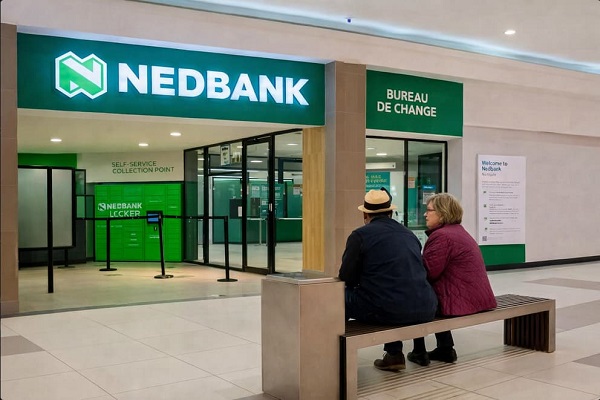
Important notes on Nedbank pricing guide & what it will help you understand:
- Nedbank uses a structured account-tier model with bundled and pay-as-you-use elements.
- Costs are strongly influenced by whether you bank digitally or rely on branch-assisted services.
- Cash deposits and assisted transactions tend to increase monthly fees faster than digital actions.
- Real users say the key to affordability is choosing the right account level and adjusting daily habits.
- This guide focuses on real usage patterns rather than just listing fee tables.
TABLE of CONTENTS:
- Why I Decided to Study Nedbank Fees Differently
- The Nedbank Banking Experience
- Section 1: The Foundation How Nedbank Structures Its Fees
- Section 2: The Real Cost Drivers (What Actually Affects Your Nedbank Monthly Fees)
- Section 3: Digital Banking vs Assisted Banking (A Critical Distinction)
- Section 4: Recurring Payments and Debit Orders
- Section 5: Matching the Right Account Tier to Your Lifestyle
- Section 6: Common Fee Surprises Reported by Nedbank Users
- Section 7: Practical Fee-Reduction Strategies That Actually Work
- Conclusion: After Analysing Nedbank Pricing Guide & User Behaviour
Why I Decided to Study Nedbank Fees Differently
Instead of starting with a long list of pricing tables, I approached this guide from a practical angle: how do Nedbank fees actually feel in everyday life?
So I asked three Nedbank users, a salaried employee, a freelancer, and a retiree, a simple question:
“Which banking action do you think costs you the most each month?”
Their answers were revealing. None of them mentioned the monthly account fee first. They pointed to cash deposits, branch visits, and exceeding transaction limits.
That insight shaped this entire breakdown.
👉 Read also: Compare Major Bank Fees in South Africa
The Nedbank Banking Experience



Section 1: The Foundation How Nedbank Structures Its Fees
Before looking at individual charges, it helps to understand the foundation of Nedbank’s pricing logic.
The Tiered Account System Explained
Nedbank offers multiple account levels designed for different income groups and banking needs. Each level usually includes:
- A fixed monthly account maintenance fee
- A limited number of included digital transactions
- Additional charges once limits are exceeded
Simple Interpretation
You’re not just paying for transactions. You’re paying for a “banking package” that assumes a certain level of usage.
If your usage matches that assumption, costs feel reasonable.
If it doesn’t, extra charges begin to appear.
Section 2: The Real Cost Drivers (What Actually Affects Your Nedbank Monthly Fees)
Instead of grouping fees by technical category, let’s examine them by real-life behaviour patterns, because that’s how users actually experience them.
Behaviour Pattern A: Frequent Cash Deposits
Cash deposits, especially those done through branch tellers, often cost more than digital transactions.
Why These Deposits Cost More
Handling physical cash requires:
- Counting and verification
- Secure storage and transportation
- Additional staff involvement
These operational steps contribute to higher service costs.
From a User Perspective (Freelancer)
“Because clients pay me in cash sometimes, I deposit money often. I noticed my monthly fees were higher until I switched to fewer, larger deposits.”
Behaviour Pattern B: Regular ATM Withdrawals
ATM withdrawals are a normal part of everyday banking, but frequency matters.
How Withdrawal Behaviour Impacts Fees
- Frequent small withdrawals = more individual transaction charges
- Larger, less frequent withdrawals = fewer cumulative fees
Personal Observation
When reviewing fee patterns, users who withdrew cash weekly paid noticeably more than those who withdrew once or twice monthly.
👉 Read also: Capitec Fee Breakdown
Behaviour Pattern C: Heavy Reliance on Branch Services
Branch-assisted services are convenient but usually cost more than digital self-service options.
Examples include:
- Manual transfers done at the branch
- Printed statements requested from tellers
- Assisted cash deposits
From a Retiree User Insight
“I prefer going into the branch because it feels safer, but I did notice the costs were slightly higher than when my son helped me use the app.”
This highlights the trade-off between convenience and cost.
Audit your bank fees to identify recurring or hidden charges, and prepare evidence to dispute incorrect fees.
Section 3: Digital Banking vs Assisted Banking (A Critical Distinction)
What Counts as Digital Self-Service?
- Mobile app payments
- Online EFT transfers
- ATM self-service transactions
- Card swipes at retailers
These typically carry lower fees due to reduced operational overhead.
What Counts as Assisted Services?
- Teller-assisted transactions
- In-branch account changes
- Manual payment instructions via staff
These usually cost more because they involve direct human support and additional processing time. Even shifting just two or three routine monthly actions from branch to app can reduce total fees over time.
👉 Read also: Standard Bank Fee Highlights
Section 4: Recurring Payments and Debit Orders
Recurring payments are automatic deductions used for:
- Insurance premiums
- Subscription services
- Loan repayments
- Membership fees
Each processed debit order may have a small associated charge depending on your account structure.
Nedbank User Feedback
A salaried Nedbank client shared:
“When I reviewed my statement, I realised how many small subscriptions I had. Cancelling two unused ones reduced both my expenses and my transaction fees.”
Section 5: Matching the Right Account Tier to Your Lifestyle
Choosing the correct account tier is one of the most important decisions affecting long-term affordability.
If Your Lifestyle Is Mostly Digital
You may benefit from an account that includes:
- Multiple digital transactions
- Online payment allowances
- Lower per-transaction digital fees
If You Rely More on Cash and Branch Visits
You might require:
- Higher transaction limits
- Fewer penalties for assisted services
- A tier suited for higher in-person usage
Selecting the wrong tier can lead to paying for services you don’t use, or paying extra for exceeding limits.
👉 Read also: Absa Account Fees Compared
📢 Request a Customized Ad Space for Your Business!
Showcase your business brand to thousands of engaged readers.
Place your message and connect directly with South African banking consumers.
Section 6: Common Fee Surprises Reported by Nedbank Users
From conversations with account holders, the following cost triggers were mentioned most often:
- Exceeding included transaction limits without noticing
- Frequent cash deposits at branch counters
- Using other banks’ ATMs regularly
- Multiple small EFT transfers instead of batching payments
Each of these behaviours seems minor individually but can raise monthly costs cumulatively.
Section 7: Practical Fee-Reduction Strategies That Actually Work
1. Review Your Monthly Statement in Detail
Look for patterns rather than isolated charges. Identify which behaviours repeat and contribute most to costs.
2. Reduce Assisted Transactions Gradually
You don’t have to eliminate branch visits completely. Even reducing frequency can lower fees.
3. Consolidate Cash Handling Where Possible
Instead of depositing small amounts frequently, consider fewer deposits if your circumstances allow.
4. Align Your Account Tier With Transaction Volume
If you consistently exceed included transaction limits, moving to a higher tier may provide better long-term value.
👉 Read also: FNB Fee Schedule Explained
Conclusion: After Analysing Nedbank Pricing Guide & User Behaviour
After studying official pricing structures and listening to some Nedbank users, I realised that Nedbank’s fees are best understood through behaviour rather than static tables.
Users who bank digitally and stay within their transaction limits often experience predictable costs. Those who rely heavily on cash handling or frequent branch assistance may see higher monthly variability.
Personally, I view Nedbank as a structured banking option suited to individuals who appreciate tiered packages and are willing to monitor their usage. With awareness and small habit adjustments, many users can keep their banking costs controlled and aligned with their financial routines.
The key lesson is simple: banking costs are not only determined by the bank you choose, but by the way you interact with it every single day.
