
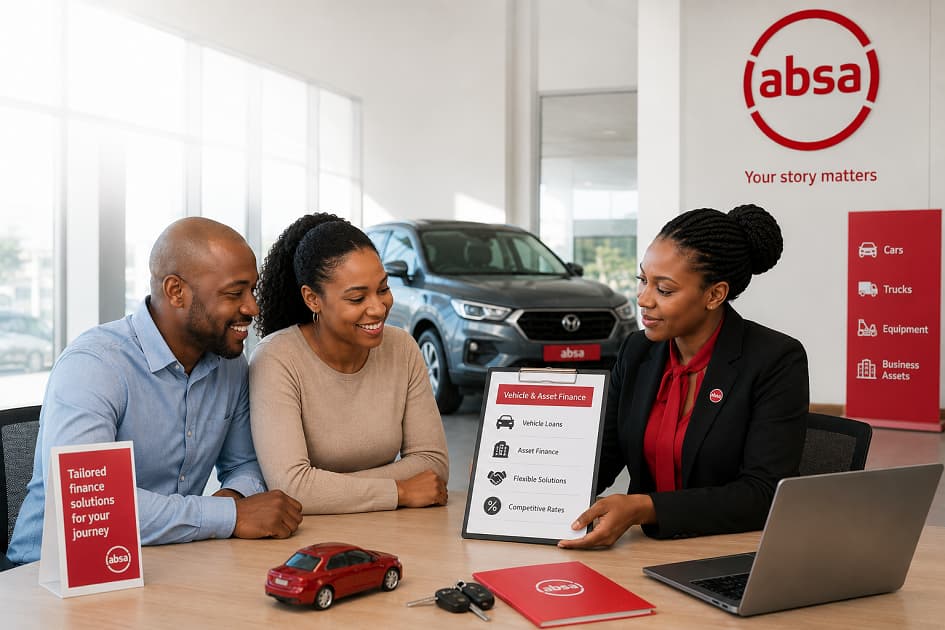
Absa Vehicle and Asset Finance allows eligible customers to finance vehicles and certain movable assets through monthly repayments. Loan approval depends on affordability, credit history, income, and other lending criteria. Interest rates may be fixed or linked to prevailing market conditions, depending on the finance agreement. A deposit is not always mandatory, but paying one can reduce monthly repayments and the total interest paid.
Customers should compare the total cost of finance, not just the advertised interest rate, before signing an agreement. Vehicle finance usually requires comprehensive insurance throughout the repayment period. Responsible borrowing helps reduce financial pressure over the life of the loan.
Buying a vehicle is one of the biggest financial decisions many South Africans make. Whether you’re purchasing your first car, upgrading to a family SUV, financing a motorcycle, or investing in business equipment, understanding how vehicle finance works can help you make a better long-term financial decision.
Absa Vehicle and Asset Finance is designed to help eligible individuals and businesses spread the cost of purchasing vehicles and selected movable assets over an agreed repayment period. Instead of paying the full purchase price upfront, customers repay the loan in monthly instalments while paying interest according to the agreed financing terms.
However, not every vehicle finance offer is the same. Interest rates, deposit requirements, repayment periods, balloon payment options, insurance obligations, and affordability assessments all influence the total amount you will repay over the life of the loan.
This guide explains how Absa Vehicle and Asset Finance works in South Africa, the eligibility requirements, available financing options, how interest rates are determined, the application process, and practical tips to improve your chances of approval.
What Is Absa Vehicle and Asset Finance?
Absa Vehicle and Asset Finance is a lending solution that enables qualifying customers to purchase vehicles or approved movable assets without paying the full amount immediately.
Instead, Absa pays the seller on behalf of the customer, and the customer repays the loan over an agreed period through monthly instalments that include both capital and interest.
Vehicle finance can be used for various qualifying purchases, including:
- New vehicles
- Used vehicles
- Light commercial vehicles
- Motorcycles
- Selected business assets
- Agricultural equipment (subject to product availability)
- Fleet financing for qualifying businesses
The specific financing options available depend on the type of customer and the asset being financed.
How Does Vehicle Finance Work?
Vehicle finance is relatively straightforward.
After choosing a qualifying vehicle:
- You submit a finance application.
- Absa assesses your affordability and credit profile.
- If approved, finance terms are provided.
- You review and accept the agreement.
- Absa pays the dealership or approved seller.
- You begin making monthly repayments.
At the end of the agreement, ownership arrangements depend on the finance structure and whether any final payment (sometimes called a balloon payment) forms part of the agreement.
Who Can Apply?
Vehicle finance is generally available to qualifying South African customers who meet the bank’s lending requirements.
Applicants typically need to demonstrate:
Stable Income
Lenders need evidence that you can comfortably afford the monthly repayments.
Income may come from:
- Permanent employment
- Self-employment
- Business income
- Other acceptable income sources
Acceptable Credit History
Your credit profile provides insight into how you’ve managed previous debt obligations.
A stronger repayment history generally improves your application.
Satisfactory Affordability Assessment
South African lenders are required to conduct affordability assessments before granting credit.
The assessment considers:
- Income
- Existing debt
- Living expenses
- Monthly obligations
- Disposable income
Valid Identification
Applicants usually require valid identification together with supporting documentation.
Documents You May Need
Although requirements vary depending on individual circumstances, applicants are commonly asked to provide:
Proof of Identity
Such as:
- South African ID
- Valid passport where applicable
Proof of Income
Examples include:
- Recent salary slips
- Employment confirmation
- Financial statements for self-employed applicants
Bank Statements
Recent bank statements may assist with affordability verification.
If you already bank with Absa, registering for digital banking can make it easier to monitor your finances and access statements. You may also find our guide on How to Register for Absa Online Banking in South Africa helpful before applying for finance.
Proof of Residential Address
Financial institutions are generally required to verify residential addresses in accordance with applicable regulatory requirements.
Types of Vehicles That May Qualify
Depending on lending policies and approval criteria, finance may be available for:
New Vehicles
New vehicles often qualify for competitive financing because they typically have predictable values and manufacturer warranties.
Used Vehicles
Many customers finance used vehicles to reduce the purchase price while still obtaining reliable transport.
However, lenders may consider factors such as:
- Vehicle age
- Mileage
- Condition
- Purchase price
Commercial Vehicles
Businesses may finance qualifying commercial vehicles used for operational purposes.
Motorcycles
Certain qualifying motorcycles may also be financed.
Understanding Interest Rates
One of the most important aspects of any finance agreement is the interest rate.
Even a small difference can significantly affect the total repayment amount over several years.
What Determines Your Interest Rate?
Several factors influence the rate offered.
These commonly include:
- Credit profile
- Income stability
- Deposit amount
- Loan amount
- Repayment period
- Market interest rates
- Lending risk assessment
Fixed Interest Rate
With a fixed interest rate:
- Monthly repayments remain predictable if the agreement specifies fixed pricing.
- Budgeting becomes easier because instalments generally stay the same for the agreed fixed period.
Variable Interest Rate
Variable rates may change when broader market interest rates change.
This means:
- Repayments could increase.
- Repayments could decrease.
- Total borrowing costs may change during the loan term.
Repayment Periods
Vehicle finance is usually repaid over several years.
Longer repayment periods generally:
Advantages
- Lower monthly instalments
- Easier monthly budgeting
Disadvantages
- More interest paid over time
- Longer debt commitment
Shorter repayment periods usually:
- Reduce total interest costs
- Increase monthly instalments
Finding the right balance depends on your financial situation.
Should You Pay a Deposit?
A deposit is not always compulsory, but it can provide several financial benefits.
Paying a deposit may:
- Reduce the amount borrowed
- Lower monthly repayments
- Reduce total interest paid
- Improve affordability
- Increase approval prospects in some cases
For many buyers, saving for a deposit before purchasing a vehicle can lead to meaningful long-term savings.
What Is a Balloon Payment?
Some vehicle finance agreements include a balloon payment.
A balloon payment means:
- Monthly instalments are lower during the finance term.
- A larger lump-sum amount becomes payable at the end of the agreement if ownership is to be retained, depending on the finance structure.
While this option can improve short-term affordability, it also increases the amount still owed at the end of the loan.
Customers should fully understand the implications before choosing this repayment structure.
Insurance Requirements
Financed vehicles generally need comprehensive insurance for the duration of the finance agreement.
Insurance helps protect both:
- The borrower
- The finance provider
Premiums should be included in your overall affordability calculations before purchasing a vehicle.
Additional Costs to Consider
Many buyers focus only on the monthly instalment.
However, vehicle ownership involves additional ongoing expenses.
These may include:
- Insurance premiums
- Fuel
- Vehicle servicing
- Maintenance
- Licence renewals
- Tyres
- Parking
- Toll fees where applicable
Understanding these costs provides a more realistic picture of affordability.
How to Apply for Absa Vehicle and Asset Finance
The application process generally follows these steps.
Step 1: Choose Your Vehicle
Decide on the vehicle or qualifying asset you wish to finance.
Step 2: Gather Supporting Documents
Prepare the documentation needed for identity and affordability verification.
Step 3: Submit Your Application
Applications may be submitted through participating dealerships or available Absa finance channels, depending on the purchase arrangement.
Step 4: Credit Assessment
Absa reviews your:
- Income
- Credit history
- Existing debt
- Affordability
- Supporting documentation
Step 5: Receive a Finance Offer
If approved, you’ll receive the proposed finance terms outlining important details such as:
- Interest rate
- Monthly repayment
- Repayment period
- Applicable fees
- Total repayment obligations
Review these carefully before accepting.
Step 6: Sign the Agreement
Once accepted, the finance agreement becomes effective and the purchase process can proceed.
Tips to Improve Your Approval Chances
While approval is never guaranteed, several practical steps may strengthen your application.
Maintain a Healthy Credit Record
Pay existing debts on time and avoid missed payments.
Reduce Existing Debt
Lower monthly obligations may improve affordability calculations.
Save for a Deposit
Even a modest deposit can reduce borrowing costs.
Avoid Multiple Credit Applications
Submitting numerous applications within a short period may affect how lenders assess your credit profile.
Ensure Your Information Is Accurate
Incorrect or incomplete documentation can delay processing.
Managing Your Loan Responsibly
Once approved, responsible loan management becomes essential.
Consider the following habits:
- Pay instalments on time.
- Keep insurance active.
- Review your budget regularly.
- Avoid unnecessary additional borrowing.
- Maintain an emergency savings fund where possible.
These practices can help reduce financial stress throughout the repayment period.
Vehicle Finance and Your Overall Budget
A vehicle should fit comfortably within your overall financial plan.
Before accepting any finance offer, consider:
- Housing costs
- Utility bills
- Insurance
- Food expenses
- Existing loan repayments
- Emergency savings
- Future financial goals
If vehicle repayments leave little room in your monthly budget, it may be worth considering a less expensive vehicle or a larger deposit.
Many South Africans also overlook the impact of everyday banking costs on their monthly budget. Our guides on How to Reduce Monthly Bank Fees in South Africa (Without Changing Banks), Compare Major South African Bank Fees, and Absa Account Fees Compared: What I Learned From The Users explain how reviewing banking habits can help reduce unnecessary expenses alongside major commitments such as vehicle finance.
Frequently Asked Questions
Can I finance a used vehicle through Absa?
Yes. Eligible used vehicles may qualify for finance, subject to the bank’s lending policies and assessment criteria.
Is a deposit compulsory?
Not always. Whether a deposit is required depends on factors such as the finance agreement, affordability assessment, and lending criteria.
Can self-employed people apply?
Yes. Self-employed applicants may qualify, provided they meet the bank’s affordability and documentation requirements.
Does Absa finance commercial vehicles?
Eligible commercial vehicles may qualify, depending on the purpose of the finance and the customer’s application.
How long does approval take?
Approval times vary depending on the complexity of the application, the completeness of the supporting documents, and the required credit assessment.
Can I settle the loan early?
Many finance agreements allow early settlement, although applicable terms, conditions, and any settlement calculations should be confirmed before proceeding.
Conclusion
Absa Vehicle and Asset Finance can make purchasing a vehicle or qualifying business asset more manageable by spreading the cost over time. However, the most affordable loan is not necessarily the one with the lowest advertised monthly instalment. Factors such as the interest rate, repayment period, deposit, balloon payment, insurance, and total repayment amount all influence the overall cost of borrowing.
Before signing any finance agreement, compare offers carefully, assess your long-term budget, and ensure the repayments remain affordable even if your financial circumstances change. Taking the time to understand the full cost of vehicle ownership, not just the purchase price, can help you make a more informed financial decision and reduce the risk of future financial strain.
