
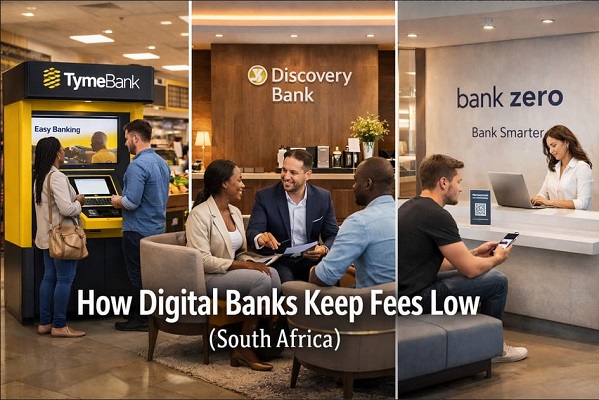
Insights on How Digital Banks Keep Fees Low
- Digital banks keep fees low by eliminating expensive branch networks and automating services through mobile apps.
- Cloud-based infrastructure reduces operational costs compared to legacy banking systems.
- Behaviour-based pricing shifts costs to high-usage or cash-heavy customers.
- ATM withdrawals and cash deposits are more expensive because they involve external networks and physical handling.
- The lower fees are real, but only if your banking behaviour aligns with digital usage.
👉 Read also: TymeBank Fee Structure Explained
TABLE of CONTENTS:
- Are Digital Banks Really Cheaper, Or Just Marketed That Way?
- Where Digital Banks Still Incur Costs
- A Practical Cost Comparison Scenario
- Common misperception is that digital banks are always the most affordable.
- Ideas to Benefit from Low Digital Bank Fees
- End: The Real Reason Digital Banks Feel Cheaper
Are Digital Banks Really Cheaper, Or Just Marketed That Way?
When I first switched from a traditional bank to a digital bank, I assumed the lower monthly fee was simply a marketing strategy.
But after digging into how these banks operate, I realised something important:
Digital banks genuinely have lower operating costs, and that’s why they can charge lower fees.
However, the story isn’t just about “no branches.” It’s about technology, infrastructure, automation, and behavioural pricing models.
In this guide, I’ll explain exactly how digital banks keep fees low in South Africa, using real-life banking examples and simple explanations, no financial jargon.
1. No Expensive Branch Networks
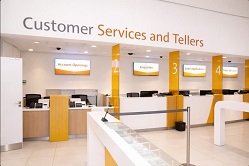

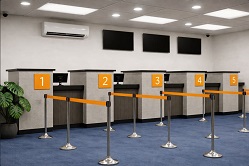
Traditional banks operate hundreds of branches across the country. Each branch requires:
- Rent or property ownership
- Security staff
- Front-desk consultants
- Utilities and maintenance
- Cash handling logistics
All of these costs are built into the bank’s overall expense structure, and ultimately passed to customers via monthly fees.
Digital banks remove most of these costs by:
- Operating primarily through mobile apps
- Using limited physical infrastructure
- Partnering with retail outlets instead of owning branches
Example
When I think about how rarely I actually visited my old bank branch, I realised I was effectively paying for something I didn’t use.
Digital banks simply remove that unused cost from the equation.
👉 Read also: Discovery Bank Fees and Rewards Explained
2. Automation Replaces Manual Processing
TymeBank
Bank Zero
Discovery Bank
Another major reason how digital banks keep fees low becomes clear is automation.
Most services that used to require human intervention are now automated:
- Account opening
- Card activation
- Debit order setup
- Statement generation
- Payment scheduling
Automation reduces labour costs dramatically.
What Is Banking Automation?
Banking automation means:
Software systems complete tasks automatically without staff involvement.
For example:
Instead of a bank employee manually processing a form, the mobile app validates and processes it instantly.
This reduces:
- Processing time
- Staffing needs
- Operational errors
And lower operational costs allow lower banking fees.
Audit your bank fees to identify recurring or hidden charges, and prepare evidence to dispute incorrect fees.
3. Cloud-Based Technology (Instead of Legacy Systems)
Traditional banks often run on older “legacy” systems built decades ago. Maintaining these systems is expensive.
Digital banks, on the other hand, often use:
- Cloud-based infrastructure
- Scalable server systems
- Modern fintech integrations
Why Cloud Infrastructure Is Cheaper
Cloud systems allow banks to:
- Scale resources up or down as needed
- Avoid massive physical data centres
- Reduce hardware maintenance costs
Instead of maintaining expensive physical infrastructure, digital banks pay for scalable services.
Those savings contribute to lower monthly account fees.
👉 Read also: Bank Zero Pricing Model Explained
4. Behaviour-Based Pricing Models
This is one of the most overlooked factors when discussing how digital banks keep fees low.
Digital banks often use behaviour-based pricing.
What Is Behaviour-Based Pricing?
Behaviour-based pricing means:
Customers who cost the bank more to serve pay more in transaction fees.
For example:
- A customer who only uses digital payments costs very little to service.
- A customer who withdraws cash daily costs significantly more due to ATM network fees.
Instead of charging everyone a high flat fee, digital banks charge low base fees and add small charges for high-cost actions.
For Instance
Think of it like electricity billing:
- If you use less electricity, you pay less.
- If you use more, your bill increases.
Digital banking follows a similar pattern.
5. Reduced Cash Handling
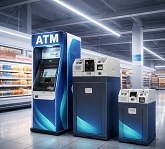

Cash handling is surprisingly expensive for banks.
It involves:
- Physical transportation
- Security services
- Insurance
- ATM maintenance
- Fraud monitoring
Digital banks aim to reduce reliance on cash by encouraging:
- Card payments
- Digital transfers
- App-based transactions
This shift toward cashless behaviour lowers the bank’s operating costs, which supports lower fees.
However, when customers frequently use cash services, transaction fees apply to cover those costs.
👉 Read also: Hidden Costs of Digital Banking in South Africa
6. Smaller Corporate Structures
Many digital banks operate with:
- Leaner management teams
- Smaller corporate offices
- Fewer physical assets
Without the massive organisational structure of traditional banks, overhead expenses are significantly reduced.
This operational efficiency contributes to:
- Lower fixed costs
- More flexible pricing
- Competitive fee structures
7. Fewer Cross-Subsidies
Traditional banks often bundle accounts. You pay one monthly fee whether you use certain services or not.
Digital banks usually avoid heavy bundling.
This means:
- You don’t subsidise services you never use.
- You pay for what you consume.
For example:
If you never visit a branch or deposit cash, you’re not indirectly paying for branch services.
That pricing transparency makes digital banking appealing to many consumers.
Where Digital Banks Still Incur Costs
It’s important to stay realistic.
Digital banks still face costs in areas such as:
- ATM network access
- Interbank payment systems
- Fraud prevention technology
- Customer support infrastructure
That’s why some fees still apply, especially for:
- ATM withdrawals
- Cash deposits
- International payments
“Low fee” does not mean “cost-free.”
📢 Request a Customized Ad Space for Your Business!
Showcase your business brand to thousands of engaged readers.
Place your message and connect directly with South African banking consumers.
A Practical Cost Comparison Scenario
Let’s compare two hypothetical users:
User A – Fully Digital
- Salary paid electronically
- Pays bills via debit order
- Uses card for groceries and fuel
- Withdraws cash once a month
Result:
This user benefits heavily from digital banking. Monthly fees stay minimal.
User B – Cash-Heavy
- Withdraws cash three times a week
- Deposits physical cash regularly
- Makes frequent manual transfers
Result:
Even at a digital bank, this user’s transaction costs increase.
This example shows that digital banks keep fees low, but only when your behaviour supports the model.
Common misperception is that digital banks are always the most affordable.
One mistake I see often is assuming:
“Digital automatically means cheapest.”
In reality, digital banks are cheapest for digital behaviour.
If your lifestyle includes frequent ATM visits and cash deposits, your total monthly cost may not be drastically lower than traditional banks.
Understanding this prevents unrealistic expectations.
👉 Read also: Digital Banks and Challenger Banks Fees
Ideas to Benefit from Low Digital Bank Fees
If you want to maximise the cost advantage of digital banks:
1. Go Mostly Cashless
Use card payments instead of withdrawing cash frequently.
2. Automate Recurring Payments
Set up debit orders instead of manual transfers.
3. Consolidate Transactions
Avoid multiple small transfers; combine them where possible.
4. Monitor Your Banking App
Track transaction patterns monthly to avoid unnecessary fees.
5. Avoid Third-Party ATM Overuse
Frequent cross-network withdrawals can increase costs.
End: The Real Reason Digital Banks Feel Cheaper
After analysing multiple South African digital banks, here’s my honest conclusion:
Digital banks don’t magically eliminate banking costs.
They remove structural inefficiencies.
By eliminating branches, automating systems, and aligning fees with behaviour, they reduce fixed expenses and shift pricing toward usage-based models.
For people who live digitally, earning, spending, and paying electronically, this model works extremely well.
But for people who rely heavily on physical cash and frequent manual banking, the savings may not be as dramatic.
So the real question isn’t:
“How do digital banks keep fees low?”
It’s:
“Does my banking behaviour allow me to benefit from those lower costs?”
That’s where the real savings happen.
